
Call Today for a FREE Consultation
210-342-3400
Recent Blog Posts
Health Insurance and Bankruptcy
 Having health insurance is extremely important. Both Chapter 7 and Chapter 13 bankruptcy can help you get and keep your health insurance.
Last week we discussed the 6 months of free health insurance provided by the recent American Rescue Plan Act. It may apply to you if you lost your job and your health insurance with it. If this applies to you please check out that blog post.
Today’s blog post gets into the broader topic of health insurance and bankruptcy.
There’s lots of evidence “that medical bills are the single largest causal factor in consumer bankruptcy.” Medical Debt as a Cause of Consumer Bankruptcy. Studies have been showing this for many years.
What may be more surprising is that most people who file for bankruptcy have health insurance at the time of filing. According to one study, nearly 70% of personal bankruptcy filers had health insurance. Medical Bankruptcy in the United States, The American Journal of Medicine.
How Does the Process Work When You File for Bankruptcy in Texas?
 If you intend on filing for bankruptcy, then you likely already have a decent idea of what a bankruptcy is. For many people, filing for a bankruptcy is a way to get a fresh financial start and change their lives immensely, yet many people do not actually understand what the process entails. The bankruptcy process consists of various steps that must be taken in order to accurately complete the process. Though the majority of the process consists of paperwork and other administrative tasks, it can be daunting to some, which is why hiring a skilled bankruptcy attorney is recommended.
- Attend Pre-Bankruptcy Credit Counseling: Before you even begin your case, you are required to complete pre-bankruptcy credit counseling. This is typically one meeting that lasts for an hour or two with a credit counselor who is approved by the U.S. Department of Justice. This course must be completed within six months prior to your bankruptcy filing and usually involves discussing your financial situation and your options for bankruptcy.
If You Already Owe Income Taxes
 What do you do (and not do) if you already owe 2018 or 2019 income taxes, or taxes from earlier years, and haven’t sent in the latest tax returns? What if you owe 2020 income taxes even though the IRS is not taxing $10,200 of unemployment income that year? That was our topic last week. The first $10,200 of unemployment is not being taxed because of last month’s American Rescue Plan Act. This week’s topic covers your options if you owe income taxes for prior tax years. Even if you don’t owe for 2020, or owe less, that may not help much if you were already behind.
If You HAVEN’T Submitted Recent Tax Returns
For tens of millions of Americans, the last year has been the most financially disruptive in their lifetimes. Many lives were turned upside down around a year ago. If that includes you it’s understandable that you had trouble preparing and sending in your 2019 income tax returns.
If You Owe Taxes (Even If Unemployment Benefits Aren’t Taxed)
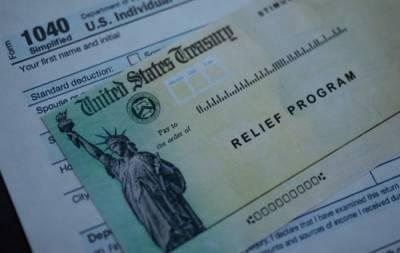 Do you owe 2020 income taxes even though the IRS is now not taxing the first $10,200 of unemployment income? What to do and not to do.
Last week we discussed the extent to which unemployment income is not taxed because of the American Rescue Plan Act. Generally, you don’t pay federal (and possibly state) income tax on the first $10,200 in benefits you received in 2020. Section 9042(a) of the Act. (See our last blog post about qualifying for this, and other details.)
Let’s get into two significant practical problems you may still have in spite of this substantial benefit:
- You received more than $10,200 in unemployment benefits and so you owe income taxes on that extra amount.
Unemployment Benefits Not Taxed
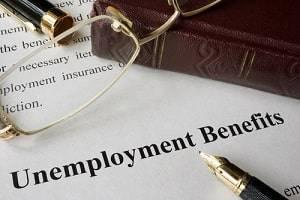
If you are among the one in four Americans who received unemployment benefits during the pandemic, the IRS is not taxing the first $10,200 of it.
Unemployment Benefits Are Generally Taxable
As the IRS states plainly, “[i]f you received unemployment compensation during the year, you must include it in gross income.” Unemployment Compensation, IRS Topic No. 418. Furthermore, “unemployment compensation” explicitly includes not just the usual “state unemployment insurance benefits.” It also includes “Federal Pandemic Unemployment Compensation provided under the . . . CARES Act of 2020.” Unemployment Compensation.
If you received unemployment benefits in 2020, you had the option of having income taxes withheld. Or you could have paid quarterly estimated tax payments. But you may not have been aware that unemployment benefits were taxable. Or money was so tight that there just was not enough to have some of it withheld. And there was not any money to pay estimated tax payments if you even realized when those were due.
Avoid Misuse of Your $1,400 Stimulus Funds

Paying your stimulus money to various combinations of creditors, in the hopes of avoiding bankruptcy or before a planned one, is dangerous.
Before You Make Decisions That Hurt You
Last week we introduced the radical idea that the best use of your upcoming or already received $1,400 stimulus payment might be to pay for a bankruptcy case. We focused then on how to figure out when you should throw in the towel and decide to file bankruptcy. One clue is if you find yourself making questionable decisions. That can mean that you are starting to feel desperate. Then the bad decisions can turn your situation even worse.
The problem is that you often do not have enough information to know whether a financial decision is a smart one. They often involve having legal knowledge that you would have no reason to know. It is often impossible to know what is sensible and what is not without understanding the legal consequences. Today we give some examples where sensible-seeming choices end up being a mistake.
Can the Government Seize Social Security Checks to Pay for Delinquent Student Loans?
 When most people think of student loan debt, they usually picture someone who has recently graduated from college within the past few years, who, along with that diploma they earned, now owes thousands and thousands of dollars in student loans. Many young adults can be so overwhelmed with student debt, with threats of wage garnishments and other heavy-handed collection tactics, that they are unable to pay their other bills. Quite often, the only option they have to get out from all that debt is to file bankruptcy. Although student loans cannot be discharged in bankruptcy, other debts can, and this may free enough income for them to be able to afford their monthly student loan payments.
But it is not just young adults who are being buried with student loan debt. More and more older people, including the elderly, are struggling with it. It is estimated that approximately seven million Americans over the age of 50 have student loan debt.
Best Use of Your $1,400 Stimulus? Bankruptcy!?

You no doubt have countless uses for the next stimulus payment. But if you are like some people, the very best use is to file bankruptcy. Like who?
Last week Congress passed the American Rescue Plan Act and President Biden signed it into law. Among its many parts is the $1,400 per person stimulus payment—officially called the Economic Impact Payment. On Friday, March 12, 2021, the IRS put out a news release about these payments. This provides general information about qualifying for the payments, and the amounts individuals and families will receive. There are more details in this IRS Fact Sheet. For information on your own payment, “[b]eginning Monday [March 15], people can check the status of their third payment by using the Get My Payment tool . . . .”
Chapter 13 Bankruptcy Helps You Sell Your Home

Chapter 13 bankruptcy enables you to use the pandemic’s mortgage payment forbearance process and sell your home if and when you are ready to do so.
Last week we showed how Chapter 7 helps you take advantage of the pandemic foreclosure moratorium when selling your home. Today we show how it works even better with the more powerful Chapter 13 “adjustment of debts.”
In the last few weeks, there has been an important related development. The Biden Administration extended the foreclosure moratorium deadline by three months, from March 31 to June 30, 2021. This also extended the mortgage payment forbearance request window until June 30, and potentially lengthened certain ongoing forbearances. White House Fact Sheet, February 16, 2021.
FAQs Surrounding the Foreclosure Process in Texas
 It is extremely difficult to face foreclosure. You may feel angry, upset, and frustrated, and all of those feelings are to be expected. However, if you are in danger of losing your home, it is important to remain calm and to understand how the process works. This is the only way to identify any potential defense you may have, which will give you the best chance of keeping your home. To learn more, our attorneys have created a list of the most frequently asked questions they are asked about foreclosure, and the answers to them.
Is Texas a Judicial Foreclosure State?
Most foreclosures in Texas are non-judicial. This means that when a borrower defaults on their mortgage, the lender can foreclose on the home without first filing a lawsuit against them and going to court. Non-judicial foreclosure is only available when the mortgage deed contains a Power of Sale clause. When a mortgage loan does include a Power of Sale clause, the borrower has already agreed that the lender can foreclose on the home in the event that they default on the mortgage.
Call Today for a FREE Consultation
210-342-3400