
Call Today for a FREE Consultation
210-342-3400
What Happens to Credit Card Debt in Bankruptcy?
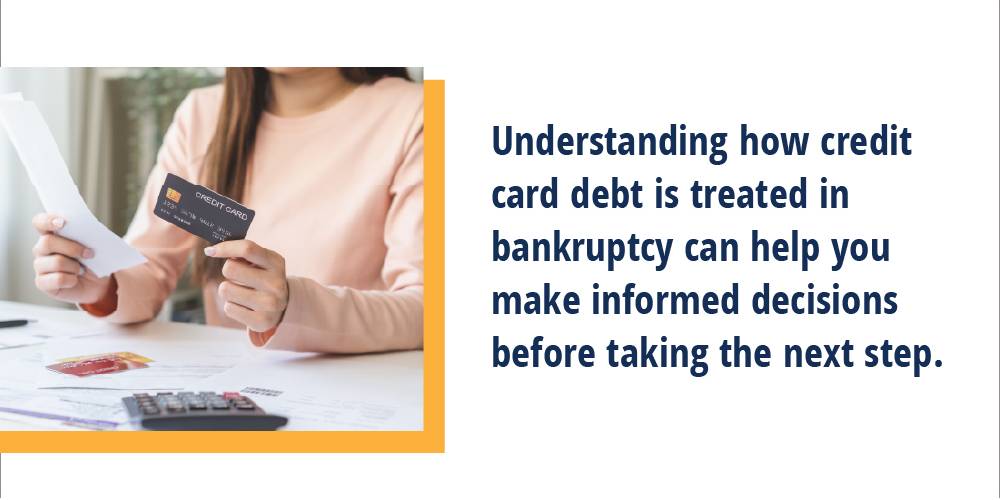
 The most common question most people want answered when they think about bankruptcy is, "What happens to your credit card debt when you file for bankruptcy?" In most cases, credit card debt gets forgiven completely.
When you file for bankruptcy in Texas, your credit card balances become part of your case and typically get discharged, which means you no longer owe the money. The exact process depends on whether you file Chapter 7 or Chapter 13 bankruptcy in 2026, but both options can help you get rid of credit card debt permanently.
More than 500,000 people in the U.S. filed for bankruptcy last year according to the Administrative Office of the U.S. Courts. There is no shame in asking for this kind of help. If you are thinking of filing for bankruptcy, our San Antonio, TX bankruptcy attorney offers free consults so you can start thinking about your options.
How Chapter 7 Bankruptcy Eliminates Credit Card Debt
Chapter 7 bankruptcy is the most common type of consumer bankruptcy. It works by wiping out most unsecured debts. Unsecured debt means the creditor cannot take any specific property if you can’t pay. Unlike a car loan, where the lender can repossess your vehicle, credit card companies have no collateral.
When you file Chapter 7, the process moves quickly. Most cases finish in three to four months. During this time, a bankruptcy trustee reviews your financial situation to see if you have any assets that could be sold to pay creditors.
Texas has generous exemption laws under Texas Property Code Section 41 and 42 that protect your property. Your home equity, vehicle, clothing, household items, and retirement accounts typically remain safe. Many people who file Chapter 7 keep everything they own.
What Happens Right After You File Chapter 7 Bankruptcy?
The moment you file your bankruptcy petition, something important happens: An automatic stay goes into effect immediately. This is a court order that stops all collection activity. Credit card companies must stop calling you. They cannot send letters demanding payment. They cannot sue you or threaten legal action.
Your bankruptcy lawyer will list all your credit card debts in your petition. This includes store cards, bank credit cards, and any other revolving credit accounts. Each credit card company receives official notice of your bankruptcy filing from the court.
Can Credit Card Companies Challenge Your Bankruptcy?
Credit card companies rarely object to bankruptcy filings, but they can in certain situations. If you charged large amounts on a credit card right before filing bankruptcy, the card issuer might say you are trying to commit fraud.
However, most credit card debt passes through bankruptcy without any problems. If you used your cards for normal living expenses like groceries, gas, and utilities, you should not face any challenges. The credit card company would need to prove you never intended to repay the debt, which is difficult to do.
Chapter 13 Bankruptcy and Credit Card Debt
Chapter 13 bankruptcy takes a different approach. Instead of quickly wiping out your debts, you enter a repayment plan that lasts three to five years. During this time, you make monthly payments to a bankruptcy trustee who gives the money to your creditors according to your plan.
Credit card debt is unsecured debt in Chapter 13, just like in Chapter 7. This means it gets low priority in your repayment plan. The bankruptcy court requires you to pay certain debts in full, such as recent taxes and child support. These are called priority debts. Your secured debts, like car loans and mortgages, also get paid if you want to keep the property.
After covering your necessary living expenses, priority debts, and secured debts, whatever money remains is your disposable income. This amount gets divided among unsecured creditors like credit card companies. Many Chapter 13 plans pay little or nothing to credit card companies because there is no money left after covering higher priority obligations.
What Happens to Joint Credit Card Accounts in Bankruptcy?
Joint credit card accounts create a special situation in bankruptcy. When two people open a credit card together, both are equally responsible for the entire balance. If you file bankruptcy but your spouse or co-signer does not, your bankruptcy protects only you. The credit card company can still go after the other person for the full amount.
This matters for married couples in Texas. Even if only one spouse files bankruptcy, creditors might try to get money from the other spouse. You should discuss this with a bankruptcy attorney before filing to understand how it affects your partner.
Can You Use Your Credit Cards Before Filing for Bankruptcy?
Many people worry about using their credit cards in the months before filing bankruptcy. You can use credit cards for necessary expenses like groceries, medication, and utilities without causing problems. The key is using them for genuine needs rather than luxury purchases.
You should stop using all credit cards once you decide to file bankruptcy. Making new charges when you know you plan to file can look like fraud.
Life After Credit Card Debt Gets Discharged
Once your bankruptcy case ends and your credit card debt gets discharged, those balances disappear. The credit card companies cannot try to collect the money. They cannot call you or send letters. They cannot sue you or garnish your wages. The debt is gone.
Your credit report will show the accounts as discharged in bankruptcy. This notation stays on your credit report for up to 10 years for Chapter 7 or up to seven years for Chapter 13. During this time, you can rebuild your credit by making on-time payments on any remaining obligations and possibly obtaining a secured credit card.
Contact a San Antonio Consumer Bankruptcy Attorney
Getting rid of overwhelming credit card debt through bankruptcy can give you a fresh financial start. If you live in Texas, a New Braunfels bankruptcy lawyer can help you decide which type of bankruptcy makes sense for your situation. Call the Law Offices of Chance M. McGhee at 210-342-3400 to learn how bankruptcy can give you the breathing room you need. We offer free consultations.
Call Today for a FREE Consultation
210-342-3400